
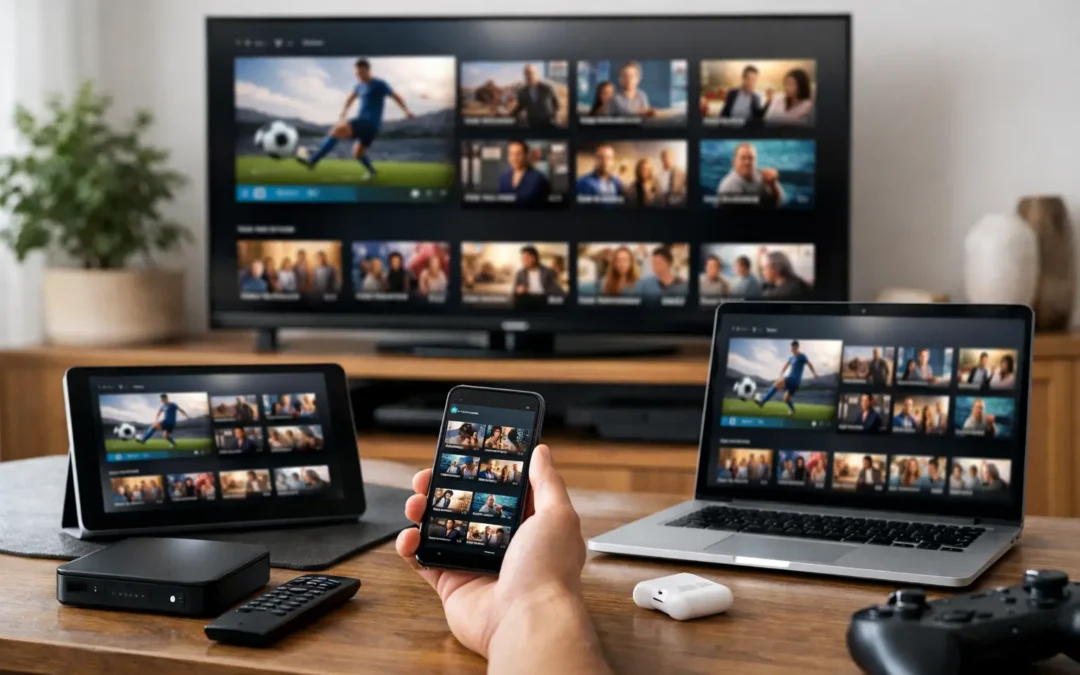
One household, five screens, three different viewing habits – and nobody wants to pay for separate services just to watch what they like. That is exactly why iptv for all devices matters. It gives you one flexible way to watch live TV, sport, films, series and kids content across the screens you already own, without the cost and hassle of old-school TV packages.
For most people, the real selling point is not just channel count. It is convenience. You want to start watching quickly, move from the living room TV to your mobile phone when needed, and avoid the usual buffering, delays and setup headaches. If a service cannot work properly on the devices people actually use every day, it is not much use no matter how many channels it advertises.
Why IPTV for all devices is such a strong option
The biggest advantage is simple – freedom. A good IPTV service is built to work across Firestick, Android TV boxes, Smart TVs, mobiles, tablets, MAG devices and more. That means you are not tied to one screen or one room. You can watch football in the lounge, catch up with a series in bed, or keep the kids occupied on a tablet when you are away from home.
That flexibility matters even more for families and shared homes. One person wants Premier League coverage, another wants films, someone else wants cartoons, and another wants international channels from back home. With broad device compatibility, everybody can watch in the way that suits them best.
There is also the money side. Traditional TV bundles often charge more while giving less freedom. You pay for equipment you do not want, contracts you do not need and packages filled with channels you never watch. IPTV turns that on its head. You get a wider mix of UK, US, European and worldwide content, plus video on demand, for a price that feels far more sensible.
What devices should IPTV work on?
If you are looking for true iptv for all devices, compatibility should not be a vague promise. It should cover the streaming hardware and operating systems most people already use.
Firestick is one of the most popular choices because it is affordable, quick to set up and easy for non-technical users. Android boxes are another favourite, especially for viewers who want a more dedicated streaming setup. Smart TVs are ideal if you want fewer cables and less clutter. Mobiles and tablets matter if you like watching on the move. MAG boxes still appeal to users who prefer a more traditional set-top-box feel.
Apple devices can work well too, although setup can sometimes be a bit more specific than on Android-based systems. That is one of those areas where support matters. A provider can claim compatibility, but if the setup process is awkward and nobody helps, the experience falls apart quickly.
The best services make this straightforward. They offer instant activation, simple app options and hands-on support so you are not left guessing what to install or how to log in.
The difference between compatibility and real usability
Not every service that says it works on multiple devices actually delivers a good experience on them. That is where buyers can get caught out.
A service may technically run on a Smart TV app, for example, but the layout might be clumsy, channel switching might be slow, or the stream quality may dip at busy times. In the same way, something might work fine on an Android box but feel unreliable on a mobile network or weaker home broadband connection.
Real usability comes down to more than app access. You need stable streams, fast channel loading, reliable EPG support where available, and enough server strength to handle major sports events and peak viewing hours. Anti-buffer performance is not just a nice extra. For live sport and PPV, it is one of the main reasons people switch in the first place.
That is why a free trial or low-risk test period makes sense. It lets you check how the service performs on your own broadband, your own device and your own viewing habits. What looks perfect on a sales page still has to prove itself when match day arrives.
IPTV for all devices and different viewing styles
Not everyone uses IPTV in the same way, and that is exactly why device support matters.
Some viewers want a simple living room setup with live channels, sport and a straightforward remote-control experience. Others care more about on-demand access, where they can open films and box sets on a tablet or mobile phone whenever it suits them. Expats and international viewers often want quick access to UK channels alongside content from Europe, the US and beyond, without changing services or juggling separate subscriptions.
Then there are heavier users who expect everything in one place – live sport, PPV, kids programming, documentaries, entertainment channels and a big VOD library including 4K or UHD options where supported. For them, a service needs to be more than flexible. It needs to feel complete.
A strong provider understands that mix. It is not enough to target only the most technical streamers. Many customers want setup that feels almost plug-and-play. They want clear guidance, quick activation and support that solves problems fast rather than sending them round in circles.
What to look for before you buy
Price matters, but it should not be the only factor. Cheap means very little if the stream freezes during a big match or the setup becomes a chore.
Start with stability. If a provider talks confidently about uptime and anti-buffer performance, that should be backed by actual support and a service structure designed for busy viewing periods. Then look at content range. A strong package should cover live TV, sport, films, series, kids content and international channels, not just one or two standout categories.
Device coverage is the next key point. Make sure the service is practical for the screens you use now, not just the screens you might use later. If you have a Firestick in the lounge, a Smart TV in the bedroom and an iPhone for travelling, the service should fit that routine easily.
It is also worth checking whether there are second-device options or flexible upgrades. For some households, one connection is enough. For others, paying a bit extra for another device is still far better value than taking out another full subscription elsewhere.
Finally, support matters more than many people think. Fast help can make the difference between watching in minutes and wasting an evening trying to fix settings. Good support is especially important for first-time IPTV users, but even experienced streamers value a provider that responds quickly when needed.
Why setup support can matter as much as the stream
A lot of buyers are not worried about the content. They are worried about getting it working.
That concern is fair. Different devices use different apps, and the setup steps are not always identical. Firestick users may need one method, Smart TV users another, and MAG or mobile users something else again. The easier a provider makes that process, the better the customer experience from day one.
This is where a hands-on service stands out. Instead of leaving customers with vague instructions, it gives proper guidance and gets them live quickly. For a busy parent, a sports fan trying to catch kick-off, or someone less confident with tech, that is a major advantage.
At iptv-subscription.co.uk, that mix of instant activation, broad compatibility and direct setup help is exactly what makes the service practical for everyday viewers rather than just hobbyist streamers.
Is IPTV for all devices right for you?
If you only ever watch one or two channels on one screen, you may not use every benefit. But most people want more choice than that. They want flexibility, stronger value and content that follows them from one device to another.
That is where IPTV stands out. It suits people who want premium sport without inflated TV bills, families who need different content on different screens, and international viewers who want UK and global channels in one place. It also suits anyone tired of being boxed into rigid contracts and overpriced bundles.
The main thing is choosing a service that combines device support with genuine performance. Broad compatibility sounds great, but stable playback, fast activation and proper customer support are what make it worth paying for.
If you want your TV service to fit around your life instead of forcing you into one setup, start with compatibility, test the quality, and choose the option that works where you actually watch. That is usually where better viewing begins.